Staring at a crochet hook sizes chart full of letters, numbers and millimeters? You can skip the confusion: trust the millimeter size on the hook, then check it with a gauge swatch.
This page is part of our wider guide to knitting and crochet for beginners.
| Item | Value |
|---|---|
| Hook diameters made | 0.35 mm to 25 mm |
| Most reliable size on a package | The millimeter (mm) size |
| US label for a 5 mm hook | H-8 |
| Regular (yarn) hooks | 2.00 mm or larger |
| Steel hook numbering | Higher number means a smaller hook; #14 is the smallest |
The figures come from the Craft Yarn Council’s hooks and needles standard and the Wikipedia crochet hook entry. Sizes and labeling can change, so check the sources before you rely on them.
Crochet hook sizes chart: millimeters and US sizes
The chart below follows the Craft Yarn Council’s list and pairs each millimeter size with its US letter-and-number label. The millimeter column matters most, because the size of a hook is set by the diameter of its shaft.
| Millimeter size | US crochet hook size |
|---|---|
| 2.25 mm | B-1 |
| 2.75 mm | C-2 |
| 3.25 mm | D-3 |
| 3.50 mm | E-4 |
| 3.75 mm | F-5 |
| 4 mm | G-6 |
| 4.50 mm | 7 |
| 5 mm | H-8 |
| 5.50 mm | I-9 |
| 6 mm | J-10 |
| 6.50 mm | K-10 ½ |
| 8 mm | L-11 |
| 9 mm | M/N-13 |
| 10 mm | N/P-15 |
Source: the Craft Yarn Council hooks and needles page, which also lists some in-between sizes that this shortened chart leaves out.
Watch the G range in particular. The council lists 4 mm as G-6 and 4.25 mm as plain G, and the Wikipedia entry notes that the 4 mm or 4.25 mm choice for crochet depends on the brand.
Why letters and numbers differ between brands
US makers print a mix of letters, numbers and metric sizes on their packaging. The Craft Yarn Council points out that letter and number sizing vary from company to company, so the millimeter figure is the one to rely on.
This is a long-standing problem. According to Wikipedia, labeling was inconsistent among manufacturers before modern standardization, which made patterns hard to reproduce.
Needles follow the same logic. The council lists them beside hooks, and the knitting needle sizes chart on this site walks through the knitting side.
How to choose a hook for your yarn
Start with the instructions you already have. Patterns and yarn labels typically name a hook size for a given project or yarn weight, and that is your starting point rather than a final answer.
- Find the recommended hook size on the yarn label or in the pattern, and note its millimeter figure.
- Pick a hook whose package shows the same millimeter size.
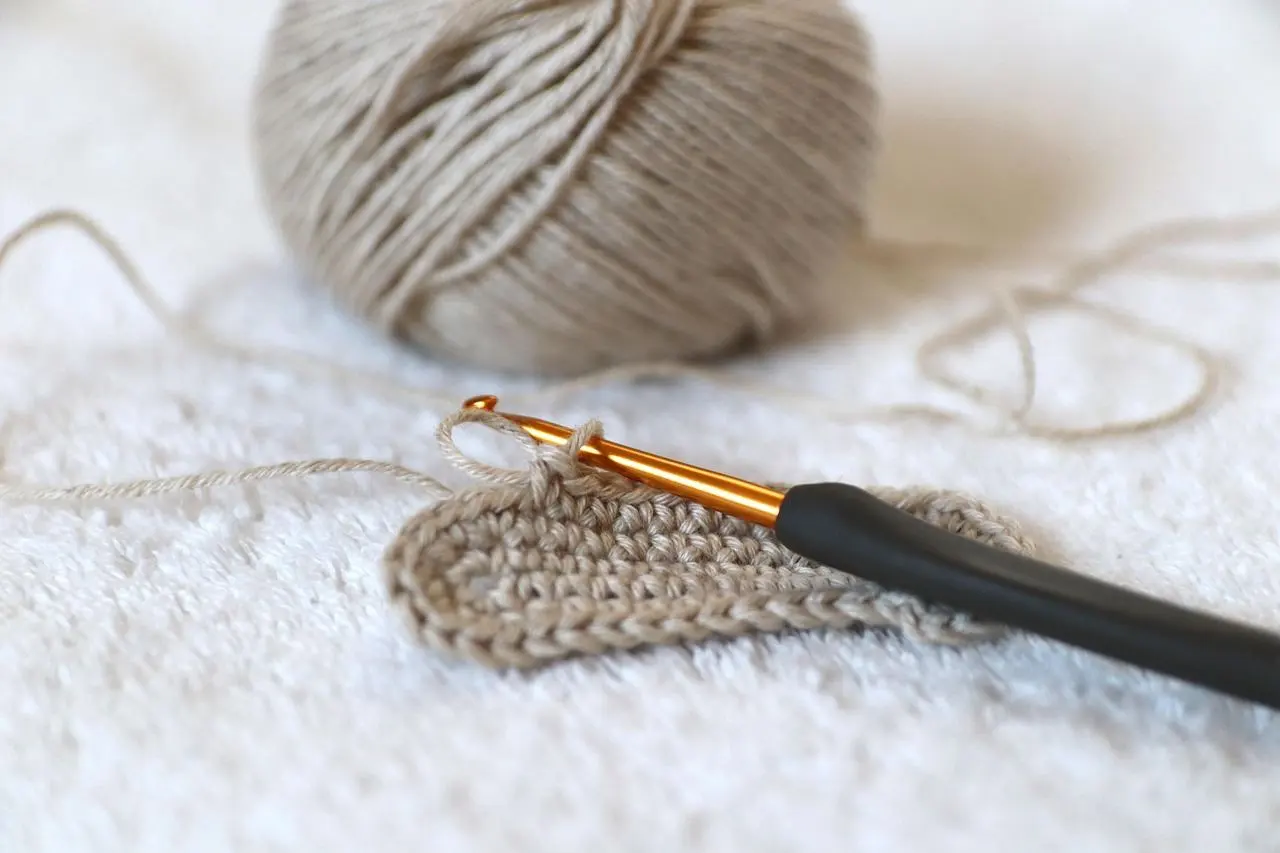
- Crochet a gauge swatch with that hook and yarn.
- Compare the swatch with the gauge printed in the pattern.
- Change the hook size up or down if the two do not match.
If you are buying your first hook, choose a size from the middle of the chart so that both the stitches and the yarn are easy to see. A regular hook from the mid-range is also easier to find in stores than the very small or very large sizes.
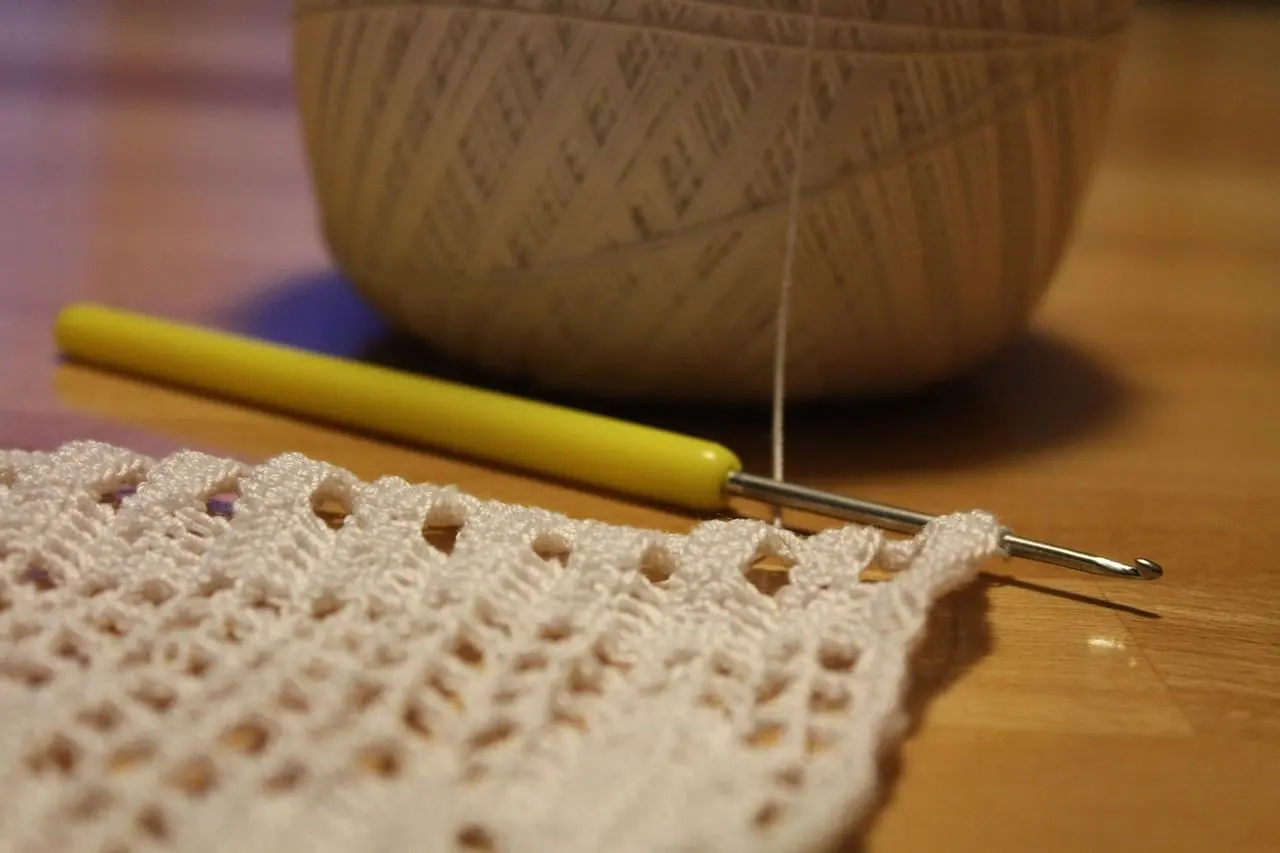
What if your gauge swatch is the wrong size?
A gauge swatch is the quickest way to learn whether a hook suits your yarn and your tension. The Craft Yarn Council’s guidance is simple, and it applies whichever sizing system your hook uses.
- Swatch larger than the pattern gauge: redo it with a smaller hook.
- Swatch smaller than the pattern gauge: redo it with a larger hook.
- Swatch matches: carry on with the project.
Swatching is not unique to crochet. If you want to see what the knitting side involves, the guide to basic knitting stitches is a gentle place to look.
Steel hooks, regular hooks and hook materials
Very fine hooks are a separate group. According to Wikipedia, hooks under 2.0 mm are made of steel, while hooks of 2.00 mm or larger are called yarn hooks or regular hooks.
The Craft Yarn Council adds a few details about steel hooks:
- They are generally used with lace weight yarns and crochet threads.
- Their numbering runs the opposite way: the higher the number, the smaller the hook.
- The smallest is a #14, and the largest is a 00, which is 2.7 mm.
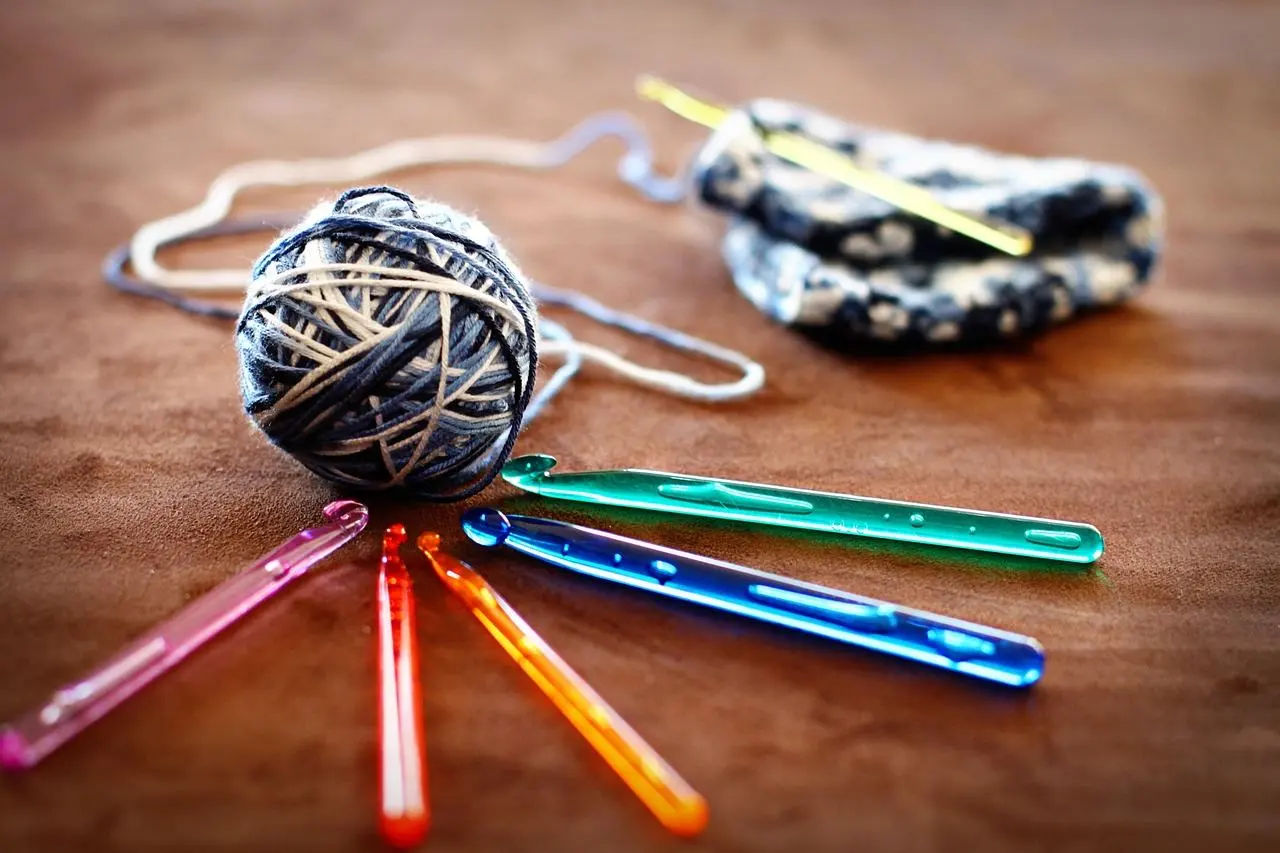
Those details are from the council’s steel hook note. For material, aluminum is widely used between 2.0 mm and 6.0 mm for its balance of strength and weight, and larger hooks are often bamboo, wood or plastic.
Longer hooks exist too. Tunisian crochet uses them to hold multiple live loops at the same time.
Frequently asked questions
Is an H-8 hook bigger than a G-6?
Show answer
Yes. On the council’s list, H-8 is 5 mm and G-6 is 4 mm, so the H-8 has the wider shaft.
Does the hook material change the size?
Show answer
No. The Craft Yarn Council says you can get the same size hook in aluminum, steel, wood and plastic, and each material has its own pros and cons.
Are hook sizes the same in every country?
Show answer
The Wikipedia entry says the listed gauge systems are widely used internationally. Even so, makers can vary, and the council advises relying on metric sizing when two products might not match.
How can I check the size of a hook with no label?
Show answer
A hook gauge is the tool for the job, and it measures both crochet hooks and knitting needles. Read off the millimeter value, then match it to the chart above.