Fighting skipped stitches, snapped needles or puckered seams? Your needle is a likely culprit. With sewing machine needles, match the type to your fabric and the size to its weight, then replace the needle often.
This guide is one small part of sewing for beginners, and it covers the part that decides how every stitch behaves.
| Item | Value |
|---|---|
| Universal needle sizes available | 60/8 to 120/19 |
| Jersey / ball point needle sizes | 70/10 to 100/16 |
| Topstitch needle sizes | 80/12 to 100/16 |
| Suggested change interval | 8-10 hours of sewing |
| Home machine needle system | 130/705 H (HAx1) |
The figures come from Schmetz’s needle primer and The Sewing Studio’s needle guide. They can change, so check the source before you rely on them.
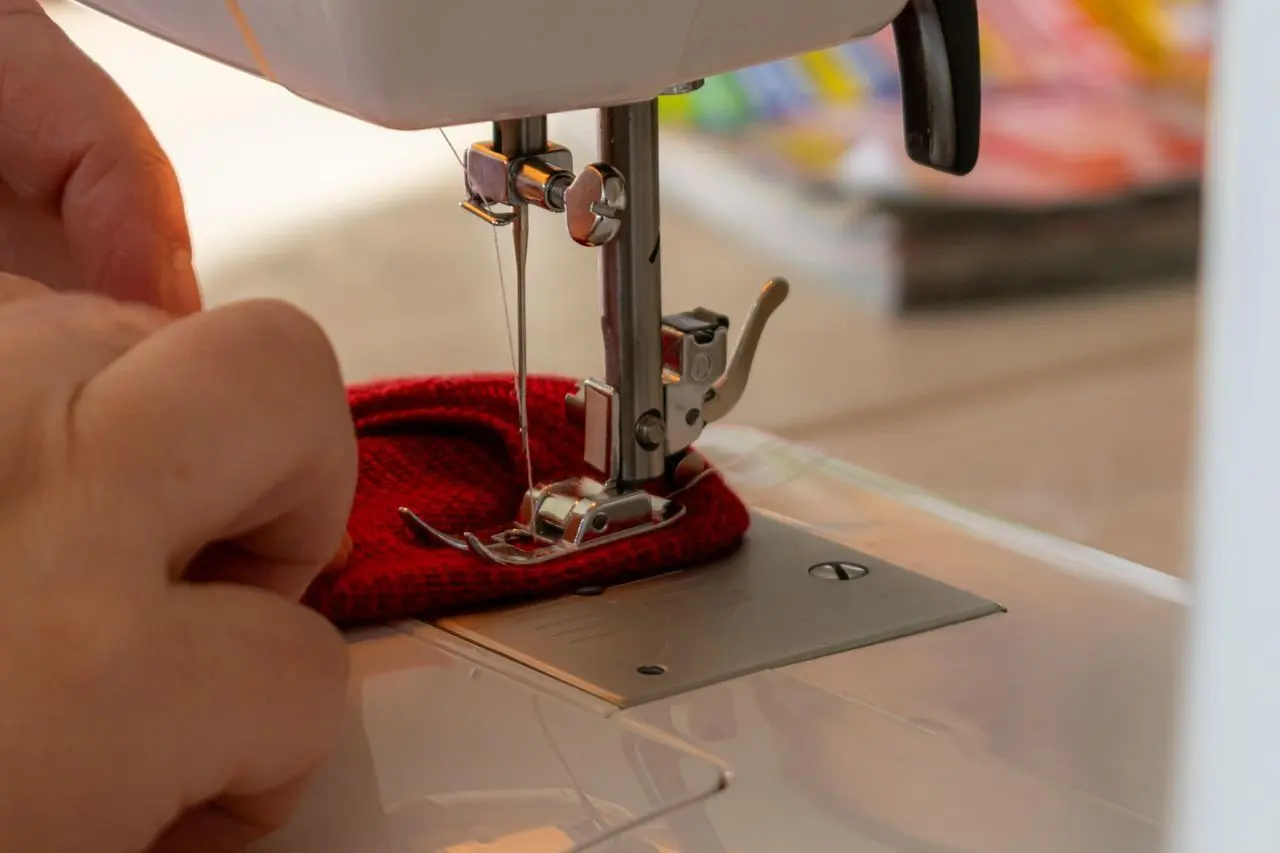
Anatomy of a sewing needle
Every needle shares the same basic anatomy, as laid out in Wikipedia’s sewing machine needle entry. Knowing the names makes packaging and troubleshooting advice much easier to follow.
- Shank and shoulder: the machine’s needle holder clamps the shank, and the shoulder is where it tapers down to the shaft.
- Shaft and groove: the shaft carries the eye and thread down to the bobbin, and the groove lets the thread lie closer to the needle.
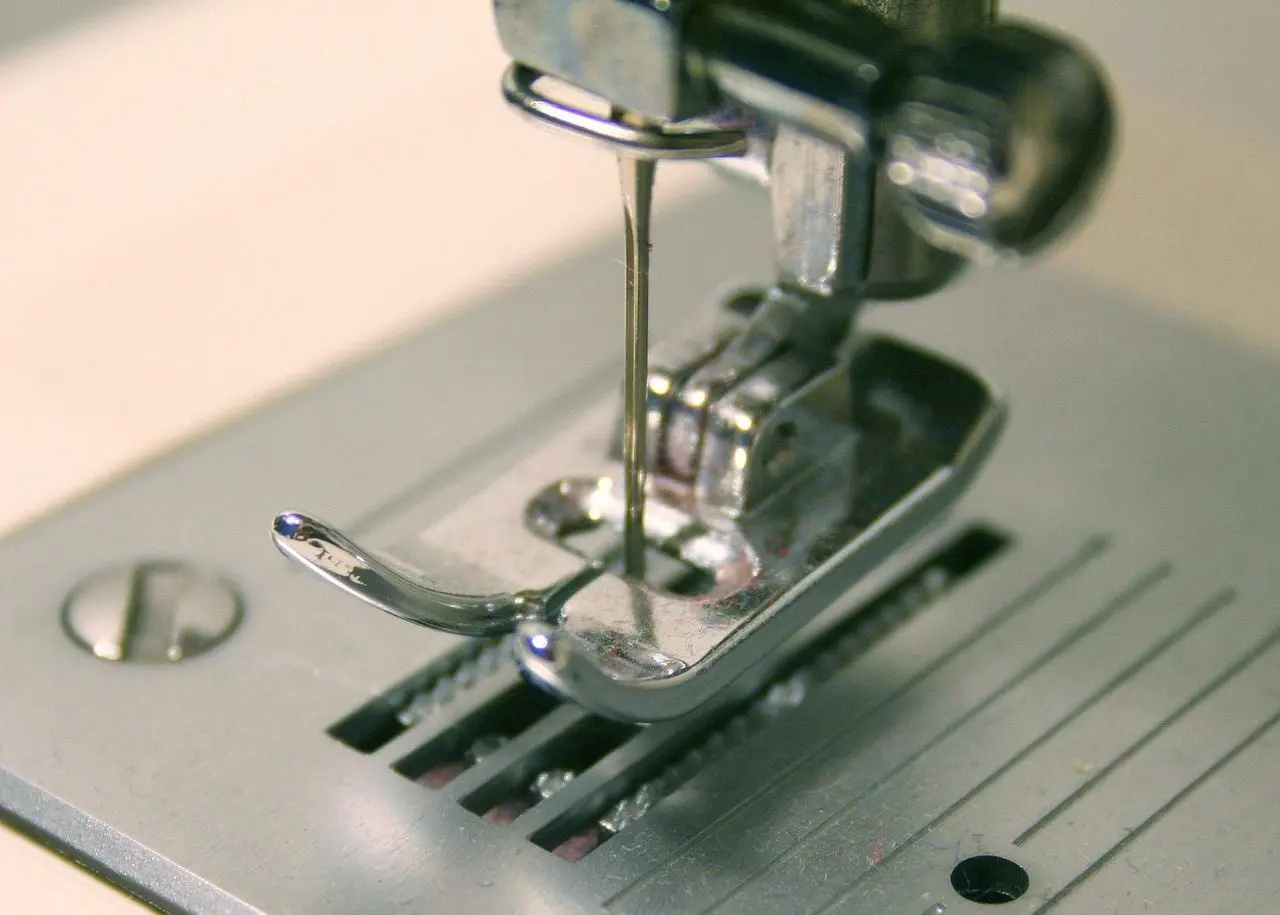
- Scarf: a cut-away that gives the hook or shuttle room to pass close by.
- Eye and point: the eye carries the thread, while the point either parts the threads or cuts a hole in the fabric.
Home machines share one standard. The Sewing Studio says all home sewing machine needles use the 130/705 H (HAx1) system and fit any modern domestic machine, so your choice comes down to type and size rather than fit.
On a universal needle, Wikipedia points to the flat face on the shank as the feature that helps you insert it correctly.
How needle sizes work
Packs show two numbers, such as 90/14. Seamwork explains that the first is the European size and the second is the American size.
The European number is the needle diameter in hundredths of a millimeter, and a larger number means a larger, heavier needle, according to Wikipedia.
The working rule is heavier fabric, bigger needle. Seamwork’s guide treats 90/14 as the medium-weight starting point, suggests an 80/12 or 75/11 for lighter cloth such as sheer cotton, and a 100/16 or 110/18 for heavier cloth such as denim.
Don’t oversize on delicate cloth. A larger needle leaves a larger hole in the sewn fabric, as Wikipedia notes.
Which needle type suits which fabric?
Schmetz’s needle primer lists the main types and their intended uses. Here is a plain-language version.
- Universal: general sewing of knit and woven fabrics, with a slight ball point.
- Jersey / ball point: made for knits and some stretch fabrics.
- Stretch: made for synthetic suede or elastic knitwear, with a deep scarf to prevent skipped stitches.
- Microtex / sharp: a sharp point for straight stitches on delicate and microfiber fabrics.
- Denim / jeans: a reinforced blade for extra thick woven fabrics, denims and quilts.
- Leather: made for leather, artificial leather and heavy non-woven synthetics.
- Topstitch: extra sharp, with an enlarged groove for large diameter threads and dense fabrics.
- Quilting: a special taper and slightly rounded point that protect material sewn in layers.
- Metallic: an enlarged polished eye that stops specialty threads from shredding.
- Embroidery: made for rayon and polyester embroidery.
Knits are where beginners slip most often. Seamwork says knit fabrics call for a jersey or ballpoint needle, whose rounded tip pushes the fibers aside instead of piercing them.
Leather and vinyl need extra care. Seamwork warns that any holes you sew in these materials will be permanent, so practise on scraps first.
When to change your needle
A common guideline from The Sewing Studio is to change the needle every 8-10 hours of sewing, or at the start of every new project.
Don’t wait for a failure. A damaged needle can harm both the cloth and the machine without you noticing, so an early swap is cheap insurance.
Plating also affects how long a needle lasts. Wikipedia describes nickel plating as the least expensive and least durable, while chrome plating lasts longer and resists abrasion better.
This guide covers machine needles only, so for a hand-sewn job see how to sew a button.
How to tell if the needle is the problem
The Sewing Studio says the wrong needle type or a dull needle is behind the majority of sewing issues. Common signs include:
- skipped stitches
- thread breakage
- puckering
- fabric damage
- fabric pushed down into the throat plate and stuck, a symptom Seamwork also describes
If you can’t tell which fix you need, test on a swatch:
- Cut a scrap of the fabric you plan to sew.
- Sew a short seam with the needle and thread you intend to use.
- Check that the hole the needle pierced isn’t too big, and listen for crunching noises, as Seamwork advises.
- If the needle struggles, try a sharper point, a bigger eye or simply a fresh needle.
Once the needle suits the fabric, easy sewing projects for beginners are a low-stakes way to practise.
Frequently asked questions
Can one universal needle handle everything?
Show answer
For everyday work it comes close, since Schmetz describes it as made for both knit and woven cloth. Switch to a specialist type for leather, metallic thread or heavy denim.
What size needle should I use for denim?
Show answer
Go larger: Seamwork names 100/16 or 110/18 for heavy cloth. A jeans-type needle also has a reinforced blade, according to Schmetz.
Why does my needle keep breaking?
Show answer
Several causes are possible, yet Seamwork calls the wrong needle one of the most common. Check that the type and size match the fabric before looking elsewhere.
What are twin needles?
Show answer
They are needles set in pairs or groups on a single shaft, used to sew several, usually decorative, threads at once, according to Wikipedia. Check your machine’s manual before buying one.