Not sure what to sew first? The best easy sewing projects for beginners use mostly straight seams: napkins, pillowcases, scrunchies and drawstring bags. Pick one and start there.
This page is one part of the sewing for beginners guide, which covers the wider basics of learning to sew.
| Project | Key fact |
|---|---|
| Cloth napkin | 4 lines of straight stitches |
| Envelope pillowcase | 5 lines of straight stitches and 3 lines of zig zag stitches |
| Scrunchie | 2-3 lines of straight stitches |
| Half-apron | 2 or 3 rectangles of fabric |
| Drawstring bag | 10 minutes in one tutorial |
These figures come from tutorials at Threads Monthly and Ruffles and Rain Boots. They can change, so check the source before you rely on them.
What makes a sewing project easy for beginners?
Look for projects built from straight lines. Heather Handmade says straight lines are the easiest seam to sew and good practice for a beginner.
The same page suggests choosing a project that uses a smaller amount of fabric, because less fabric means smaller seams. Polka Dot Chair adds that a pillow is a gentle start because, unlike clothing, it never has to fit on someone’s body.
A quick check before you commit to a project:
- Mostly straight seams, with few or no curves.
- A small amount of fabric.
- Nothing that has to fit a body.
- A cotton fabric that presses well.
Before you cut anything, read the directions from start to finish. Polka Dot Chair lists this as a first tip, and notes that precisely cut pieces and well-pressed fabric make a big difference to the finished result.
Home projects made from rectangles
Napkins are about as simple as sewing gets. According to Threads Monthly, you cut one square of fabric for each napkin and fold each edge twice before sewing, which comes to 4 lines of straight stitches.
An envelope pillowcase has an inner flap that hides your pillow insert. Threads Monthly counts 5 lines of straight stitches and 3 lines of zig zag stitches for it, and also offers a French seam version, since French seams hide the raw edges of fabric.
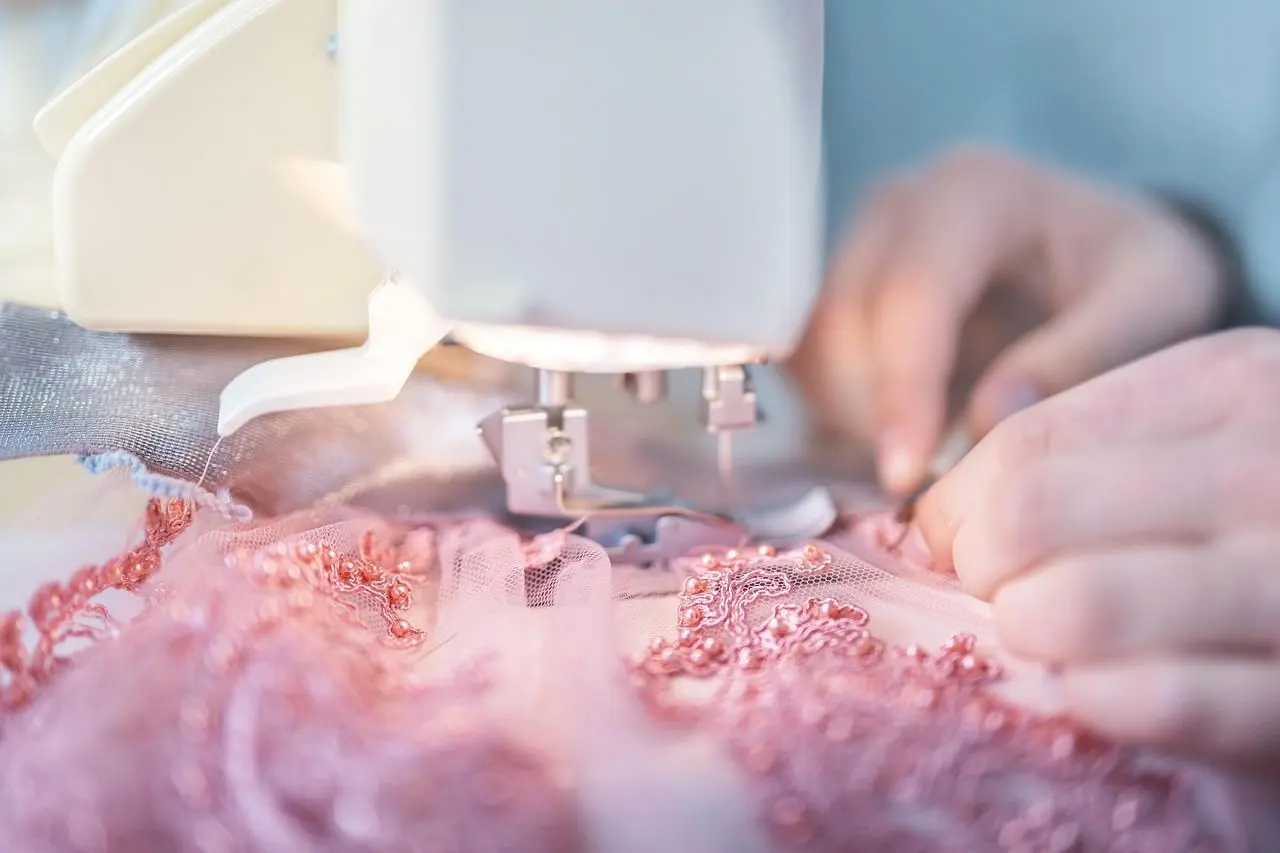
If you are new to sewing, Polka Dot Chair recommends starting with a pillow project. A simple pillow cover or a pillowcase both qualify, and both are made of straight lines.
Half-aprons are often made from 2 or 3 rectangles of fabric, according to Threads Monthly. For an easy clothing project, the same page points to a pull-on skirt, where you fold the top edge over twice to make a casing and leave a small gap to insert the elastic.
Small projects: scrunchies, drawstring bags and headbands
A scrunchie needs just 2-3 lines of straight stitches, according to Threads Monthly. Its seamless method suits you if you don’t want stitching to show on the outside, and adding the optional bow teaches you to sew curves.
A drawstring bag is a quick win: one tutorial from Ruffles and Rain Boots reports making it in 10 minutes. It suggests measuring your item and adding 2 inches on all sides so the bag fits and cinches closed, and it uses a 5/8 inch seam allowance.
To add the drawstring, clip a safety pin to one end and feed it through the casing. That tutorial cuts the string at 2 times the width of your fabric plus 5 inches, as described on its project page.
Simple headbands can feature only 2-3 straight seams, according to Polka Dot Chair. Threads Monthly recommends a small knit headband as a first stretch project, and says it teaches narrow zig zag stitches for items that stretch.
For something sturdier, try a tote bag. Threads Monthly says the fabric should be medium or heavy weight: quilting cotton is medium weight and cotton canvas is heavy weight. Canvas gives a stronger, more structured bag.
Fabric and tools to start with
Heather Handmade names quilting cotton as the best beginner woven fabric and cotton spandex jersey as the best beginner knit. It also lists fleece as another good option.
Polka Dot Chair points to 100% cotton and cotton blends as a good medium-weight fabric that can be ironed in the usual way. If you are unsure which needle suits your fabric, read about sewing machine needles before your first seam.
A small kit covers most projects on this page:
- A sewing machine and thread.
- Scissors.
- A safety pin for threading drawstrings, as the drawstring bag tutorial shows.
- Your chosen fabric, pressed before cutting.
Get to know your machine early. Polka Dot Chair says a few minutes with a video or your manual can make a really big difference.
If a project comes with a pattern, Threads Monthly describes a sewing pattern as a printable template you use to cut fabric. When you print a PDF pattern, Heather Handmade advises setting the scaling to 100% or no scaling so it prints at the correct size.
Where to go after your first project
Once straight seams feel comfortable, pick a project that teaches one new skill at a time:
- A zippered pencil case: LoveCrafts describes it as a simple zippered pouch that shows you how to sew a zipper and add lining.
- A zipper pouch in any size: Polka Dot Chair says a zipper does not make a project unsuitable for beginners.
- Reusable face cloths: LoveCrafts says they give you practice with zig-zag stitches.
The same skills carry over to repairs, so you will soon be ready to learn how to mend a hole in clothes.
Frequently asked questions
Which fabrics are harder for a first project?
Show answer
Polka Dot Chair says many synthetic fabrics can melt under an iron and are difficult for beginners to handle. It also advises avoiding fabrics that are very lightweight or very heavyweight, as noted on its beginner project list.
Can I sew by hand instead of using a machine?
Show answer
Yes, for some projects. LoveCrafts suggests either a machine or patient hand sewing for lavender bags, and calls an embroidered keepsake a good way to learn hand-sewing basics.
How can I reduce fraying without finishing every edge?
Show answer
The drawstring bag tutorial at Ruffles and Rain Boots cuts the fabric with pinking shears. It says this reduces fraying and removes the need to zig-zag stitch the edges.
When should I try stretchy fabric?
Show answer
Wait until you have sewn a few non-stretch projects. Threads Monthly calls a knit headband a nice step-up after you get used to sewing non-stretch fabrics.